When you tour memory care communities, you'll hear a lot of the same phrases. Compassionate. Person-centered. Home-like. They're easy to say and hard to prove. So when a community tells you it uses a specific, named method of dementia care, that's worth a closer look, because a method is something you can actually see in practice.
At The Plaza, that method is the Best Friends Approach®. It shapes how our team talks to residents, plans their days, and responds in the moments that matter most. Here's what it actually is, and why it changes the experience of memory care.
Where the Best Friends Approach® comes from
The Best Friends Approach® was developed by Virginia Bell, a social worker, and David Troxel, a public health expert, who spent decades working with people living with dementia and their families. Their idea was disarmingly simple. What a person with memory loss needs most isn't a better task list. It's a friend, a best friend.
That premise turned into a full model of care, taught in communities around the world and refined across several books over more than 30 years. It's built on the qualities of real friendship: respect, empathy, support, trust, and a good sense of humor.
The core idea: care as a relationship
Traditional care can slip into a checklist. Bathe, dress, feed, medicate, repeat. Those things matter, but when they become the whole relationship, the person disappears behind their needs.
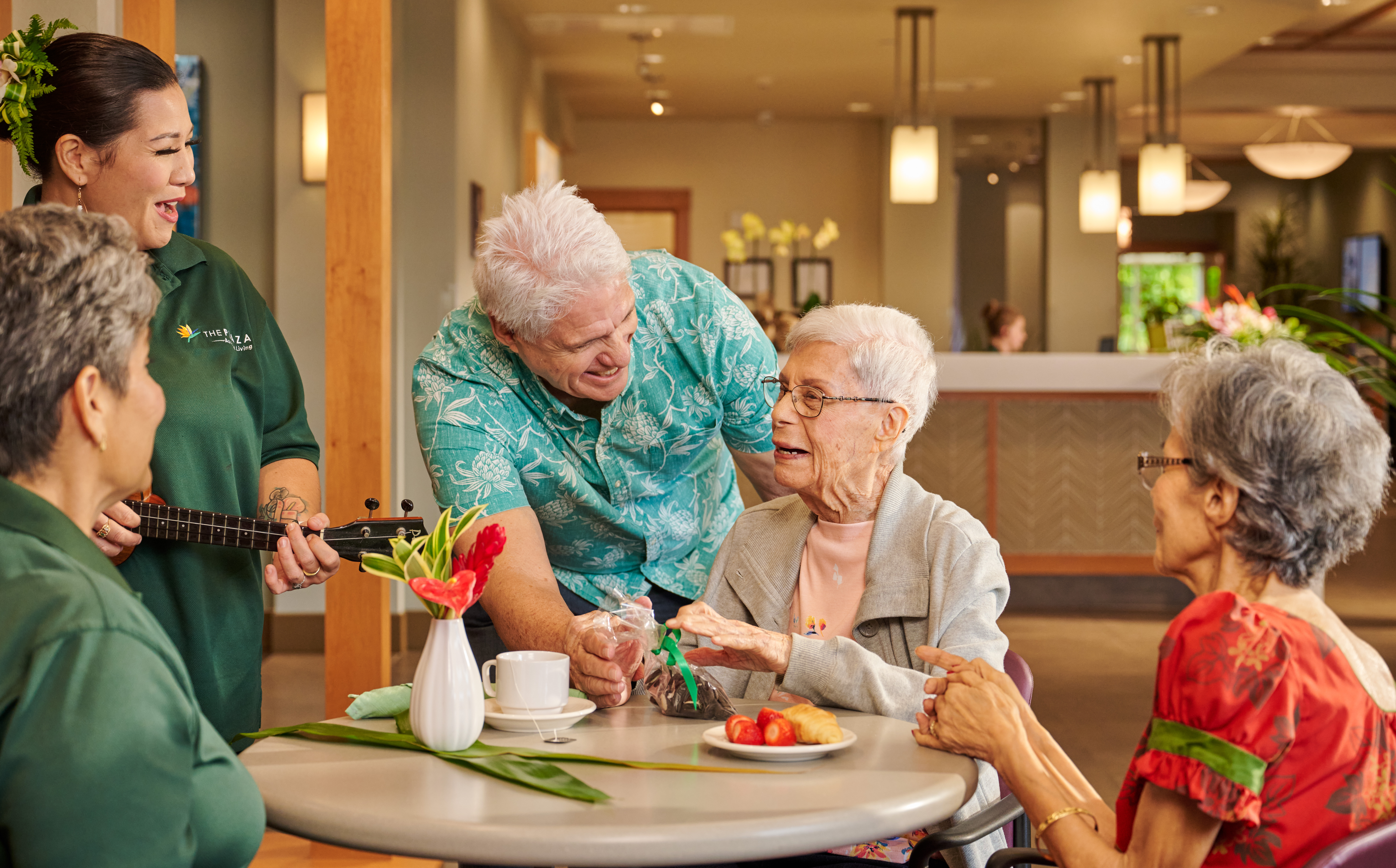
The Best Friends Approach® flips the order. The relationship comes first, and the care happens inside it. A friend doesn't just hand you a meal. A friend knows you take your coffee black, remembers you raised three kids in Kailua, and asks about the garden you used to keep. That knowledge turns a task into a moment of connection, and for someone with dementia, those moments are everything.
David Troxel, co-author of The Best Friends Approach to Dementia Care, on the four things that matter most: empathy, communication, life story, and doing things together.
The life story is the foundation
At the heart of the approach is the life story. Before a resident ever needs help with their day, our team learns who they are: where they grew up, what work they did, the music they love, the people who matter, the small preferences that make them themselves.
That story becomes a working tool. When a resident is anxious or withdrawn, staff have something real to reach for, a familiar song, a shared memory, a name that brings comfort. It's also why the same behavior gets a very different response here than it might elsewhere. Instead of asking "how do we stop this," the question becomes "what is this person feeling, and what do we know about them that can help."
What life story work looks like in practice, and how families can build a top 10 card for their own parent.
"Knack": the skill of good care
Bell and Troxel used a friendly word for the skill behind all of this: Knack. It's the art of doing the right thing in a difficult moment, reading the situation, staying calm, using warmth and humor, and meeting the person in their reality rather than correcting them into yours.
Knack is why a well-trained memory care team can ease a hard afternoon without reaching first for medication. It looks effortless from the outside. It's actually the product of real training and real relationships.
Knack in action: how the Haliʻa team used one resident's life story to shape his first week.
How The Plaza brings it to life
Plenty of communities admire the Best Friends Approach®. Fewer commit to it the way The Plaza has.
We've practiced the Best Friends Approach® for 10 years, and it's woven into the daily life of every Haliʻa Memory Care neighborhood, not saved for brochures. Most importantly, each of our six Oʻahu communities has a Certified Best Friends Master Trainer on staff. That's the piece families often miss when they compare options. A method is only as good as the people trained to deliver it, and a Master Trainer on site means the approach is taught, modeled, and kept consistent day after day, shift after shift.
It also fits Hawaiʻi. The Best Friends Approach® is about relationship, respect, and knowing a person's story, which is exactly how we already care for our kūpuna here. It gives a name and a structure to something families in the islands understand in their bones.
What it means for your family
For the person living with dementia, it means being known instead of managed. For you, it means handing your loved one to a team that will learn their story and treat them like the whole person they've always been.
If you'd like to understand how memory care compares to other options first, start with What Is Memory Care vs. Assisted Living?. And when you want to see the Best Friends Approach® in action, the best way is to visit a Haliʻa neighborhood and watch how our team interacts with residents. Schedule a tour at any of our six communities, and bring your questions.
Frequently asked questions
Who created the Best Friends Approach®? +
How is the Best Friends Approach® different from person-centered care? +
What is a Certified Best Friends Master Trainer? +
Does the Best Friends Approach® reduce the need for medication? +
See Haliʻa Memory Care for yourself
Every question on this page is easier to answer in person. Visit the Plaza community nearest you, with no pressure and no rush.