
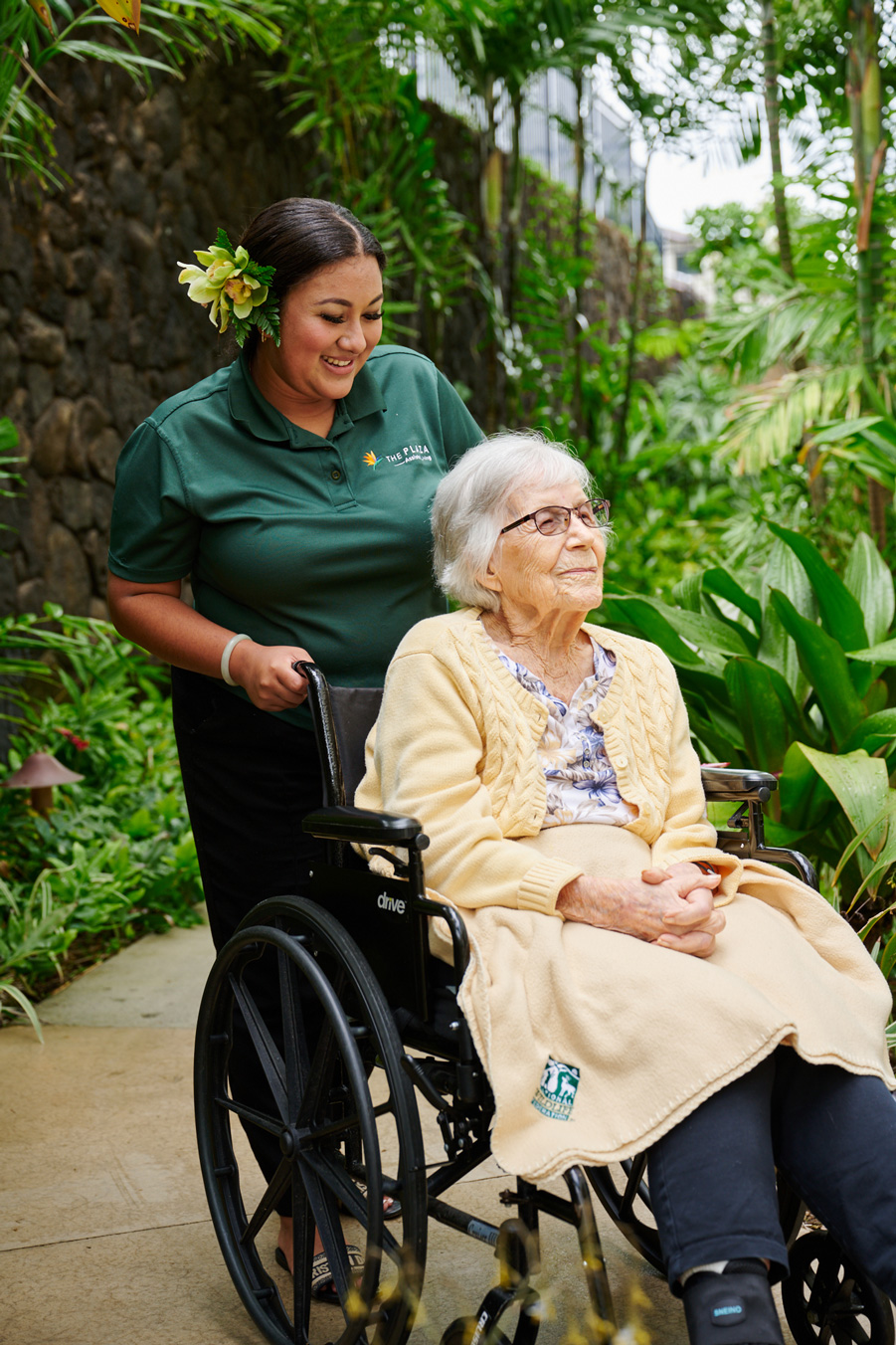
If you're reading this, you're probably somewhere most families have stood before. Something has changed with your mom, your dad, or your spouse, and the word "memory care" has come up, maybe from a doctor, a friend, or a late-night search. You want to understand what it actually means before you make any decisions.
Let's start there. Memory care and assisted living are both forms of senior living, and they share a lot. The difference is in who they're built for and how the day is designed. Understanding that difference is the first step toward feeling confident about what comes next.
What is assisted living?
Assisted living supports older adults who need a hand with daily tasks but are still largely independent. That might mean help with bathing, dressing, managing medications, or getting to meals and activities. Residents keep their own routines and make their own choices. The care is there when they need it and stays out of the way when they don't.
It's a good fit for someone who's safe on their own for stretches of the day, enjoys a social calendar, and mostly needs support with the physical parts of daily life. You can read more about how this works on our Assisted Living page.
What is memory care?
Memory care is a specialized form of assisted living for people living with Alzheimer's disease or another form of dementia. Everything about it, from the physical space to the way staff are trained, is shaped around the way memory loss changes a person's day.
The needs are different, so the care is different. Someone with dementia may be physically capable but no longer safe alone, because judgment, orientation, and short-term memory have changed. They might forget they've eaten, become anxious in the late afternoon, or feel lost in a place that should be familiar. Memory care meets those moments with structure, calm, and people who know how to respond.
Memory care vs. assisted living: the real differences
The two look similar from the outside. Here's where they actually diverge.
The environment. Memory care communities are designed to be safe and easy to move through, so residents can walk, explore, and stay active without wandering into places that aren't safe. Assisted living doesn't need that same level of built-in protection.
Staff training. This is the big one. Memory care staff are trained specifically in dementia, from how to communicate when words are slipping to how to ease anxiety without medication as a first resort. At The Plaza, that training runs deep, and we'll come back to it in a moment.
The daily rhythm. Assisted living offers a full activity calendar you opt into. Memory care builds gentle, predictable structure into the whole day, because routine itself is calming when memory is unreliable. Activities are designed to meet residents where they are rather than test what they've lost.
The level of supervision. Memory care provides closer, more consistent attention throughout the day and night. It isn't about restriction. It's about presence, so someone is always nearby to help before a small worry becomes a hard moment.
How do I know which one my loved one needs?
There's no single test, and you don't have to figure it out alone. A useful starting point is to watch how the day actually goes. Is your loved one safe when no one's around? Are they eating, taking medications, and sleeping well? Have there been moments of confusion, getting lost, or wandering? Is the person caring for them worn thin?
If those questions are getting harder to answer, it may be time to look more closely. We wrote a companion guide for exactly this moment: 10 Signs It May Be Time to Consider Memory Care. It's the piece families often share with a sibling or relative who isn't sure yet.
Memory care at The Plaza: the Haliʻa program
At The Plaza, memory care has a name: Haliʻa Memory Care. Haliʻa means a cherished memory, and that idea sits at the center of how we care for residents.
David Troxel, co-author of The Best Friends Approach to Dementia Care and memory care consultant to The Plaza, on how the Haliʻa program was built.
Every Haliʻa program is built on the Best Friends Approach®, a relationship-based method of dementia care recognized around the world. Instead of treating memory loss as a list of problems to manage, it treats each resident as a whole person with a life story, and it uses that story to connect with them every day. The Plaza has practiced the Best Friends Approach® for 10 years now, and each of our communities has a Certified Best Friends Master Trainer on staff to keep the approach alive in daily care, not just on paper. If you want to understand what makes this different, our article What Is the Best Friends Approach® to Dementia Care? walks through it.
Haliʻa is offered at all six of our Oʻahu communities, in Kaneohe, Mililani, Moanalua, Pearl City, Punchbowl, and Waikiki. And because care needs change over time, families have room to adjust as they go, rather than starting over somewhere new.
A note for Hawaiʻi families
Here, caring for our kūpuna is an act of aloha, and it's usually a family effort. Choosing memory care doesn't hand that responsibility off. It surrounds your loved one with people who help carry it, so you can go back to being a daughter, a son, or a spouse instead of a full-time caregiver. That shift, from worry to presence, is often the real reason families are glad they made the move.
If you'd like to see what Haliʻa feels like in person, the best next step is simply to visit. Schedule a tour at the community nearest you, and we'll walk you through it, no pressure and no rush.
Frequently asked questions
Is memory care more expensive than assisted living? +
Can someone move from assisted living to memory care? +
Does memory care mean a locked-away facility? +
Do all Plaza communities offer memory care? +
See Haliʻa Memory Care for yourself
Every question on this page is easier to answer in person. Visit the Plaza community nearest you, with no pressure and no rush.